![[Section Divider Image]](https://substackcdn.com/image/fetch/$s_!U7UN!,f_auto,q_auto:good,fl_progressive:steep/https%3A%2F%2Fsubstack-post-media.s3.amazonaws.com%2Fpublic%2Fimages%2F49b1e228-87b9-4c94-b3e4-bbebd0930bd9_1320x50.webp "[Section Divider Image]")
Powell ran his last FOMC meeting on Wednesday. The vote was 8 to 4, the most divided decision since 1992, with three dissents against retaining the easing bias and one in the opposite direction asking for an immediate cut. The chair holds his Board of Governors seat for now. Warsh is two weeks from confirmation. Markets priced the noise, then went back to grinding higher into a record close.
That is the surface story this week. Underneath it, the more interesting macro signal has nothing to do with the Fed funds rate.
It has to do with central banks asking the Federal Reserve for dollars.
What a dollar swap line actually is
A dollar swap line is two central banks agreeing to swap currencies. The foreign central bank delivers an equivalent amount of its own currency to the New York Fed at the prevailing exchange rate. The Fed delivers dollars into the foreign central bank’s account at the New York Fed. There is a maturity. There is an interest rate. The collateral pledge is locked at the exchange rate set on the day the swap opens, which means the Fed bears no currency risk. If the loan is not repaid, the Fed sells the pledged foreign currency on the open market and gets its dollars back, which would itself push the foreign currency lower.
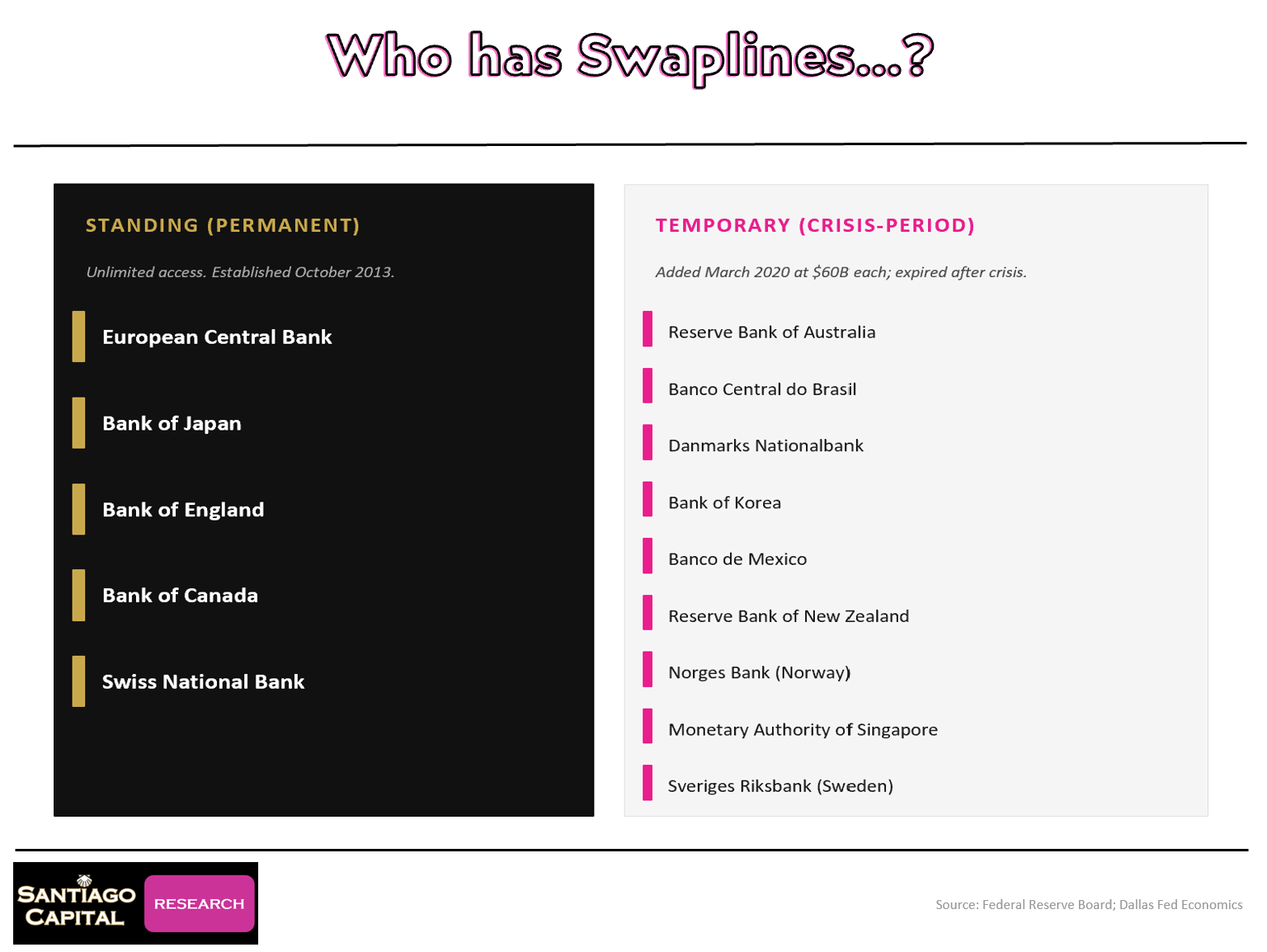
The U.S. is in the driver’s seat on every one of these. Standing permanent swap lines were converted from temporary to permanent in October 2013 with the European Central Bank, the Bank of Japan, the Bank of England, the Bank of Canada, and the Swiss National Bank. Temporary lines have been extended at various points to Brazil, Mexico, Korea, Norway, Sweden, and Denmark. China does not have one. Russia does not have one.
The foreign central bank requests the line because its banking system is short dollars. The local central bank cannot print dollars... that is the entire point of the dollar’s reserve status. So the foreign central bank goes to the Fed, takes the line, and lends those dollars onward to its commercial banks, which use them to meet whatever Eurodollar obligation has come due.
That sequence is how you read what is actually happening when you see a swap-line headline. It is the foreign banking system reaching for dollars because it has dollar liabilities it cannot otherwise fund.