![[Section Divider Image]](https://substackcdn.com/image/fetch/$s_!DUt_!,f_auto,q_auto:good,fl_progressive:steep/https%3A%2F%2Fsubstack-post-media.s3.amazonaws.com%2Fpublic%2Fimages%2F5e9c6352-478d-4fe9-a3a5-1b351eab537f_1320x50.webp "[Section Divider Image]")
![[Section Divider Image]](https://substackcdn.com/image/fetch/$s_!26By!,f_auto,q_auto:good,fl_progressive:steep/https%3A%2F%2Fsubstack-post-media.s3.amazonaws.com%2Fpublic%2Fimages%2Fcc848c0b-4021-448b-ae87-e62e6ea94bb4_1320x50.webp "[Section Divider Image]")
The hot takes this week are all about crude prices, tanker routing, and whether the strait reopens in days or weeks.
Step back.
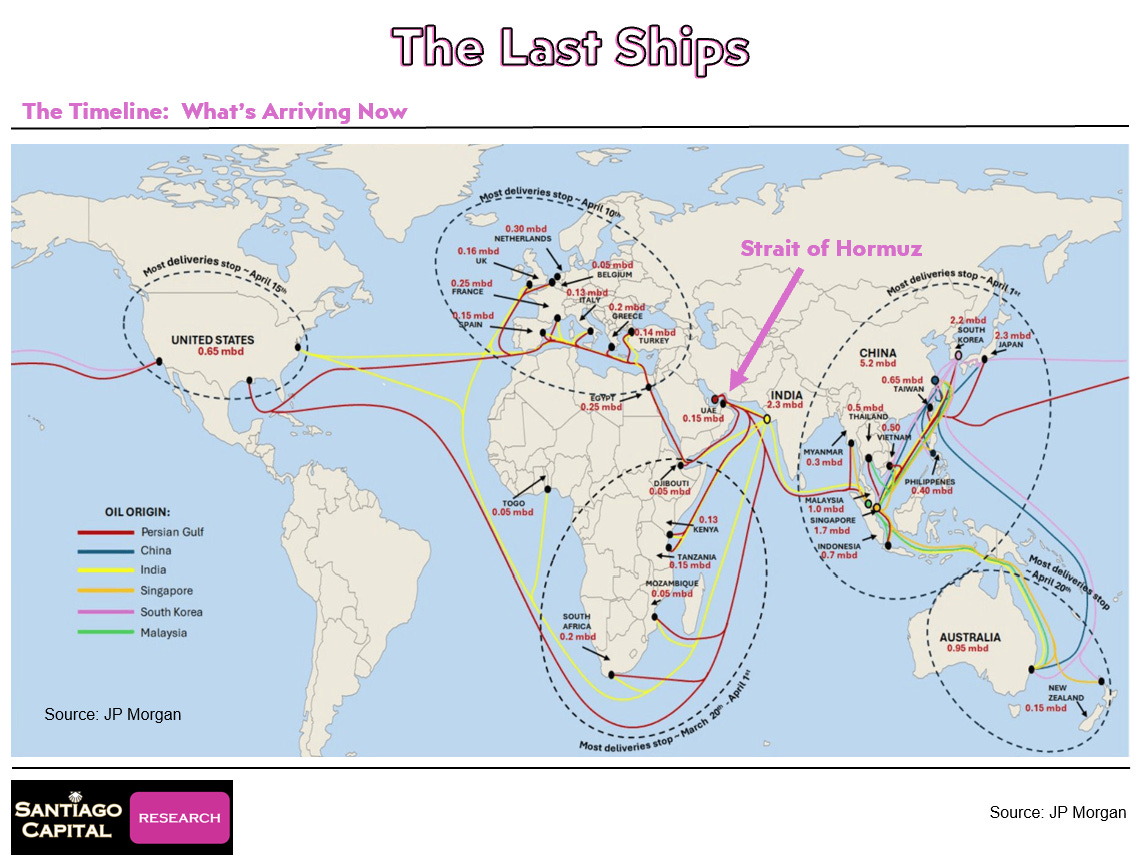
What’s actually happening right now is slower, quieter, and more consequential than anything in the financial press. The ships that were already in transit when the disruption started...they’re arriving now. The last tankers out of the Gulf are docking in Asia over the next few days. The last ones headed to Europe arrive over the next week or so. The last ones bound for North America are still weeks away.
And behind them?
Nothing.
That silence is what matters. Not the oil price. Not the VIX. Not the diplomatic back-and-forth. The question you need to be asking right now is not what happens if the strait reopens. It’s what’s already been set in motion that cannot be stopped regardless of what happens from here.
Because some of this is already locked in.
The Last Ships: Understanding the Lag That Changes Everything
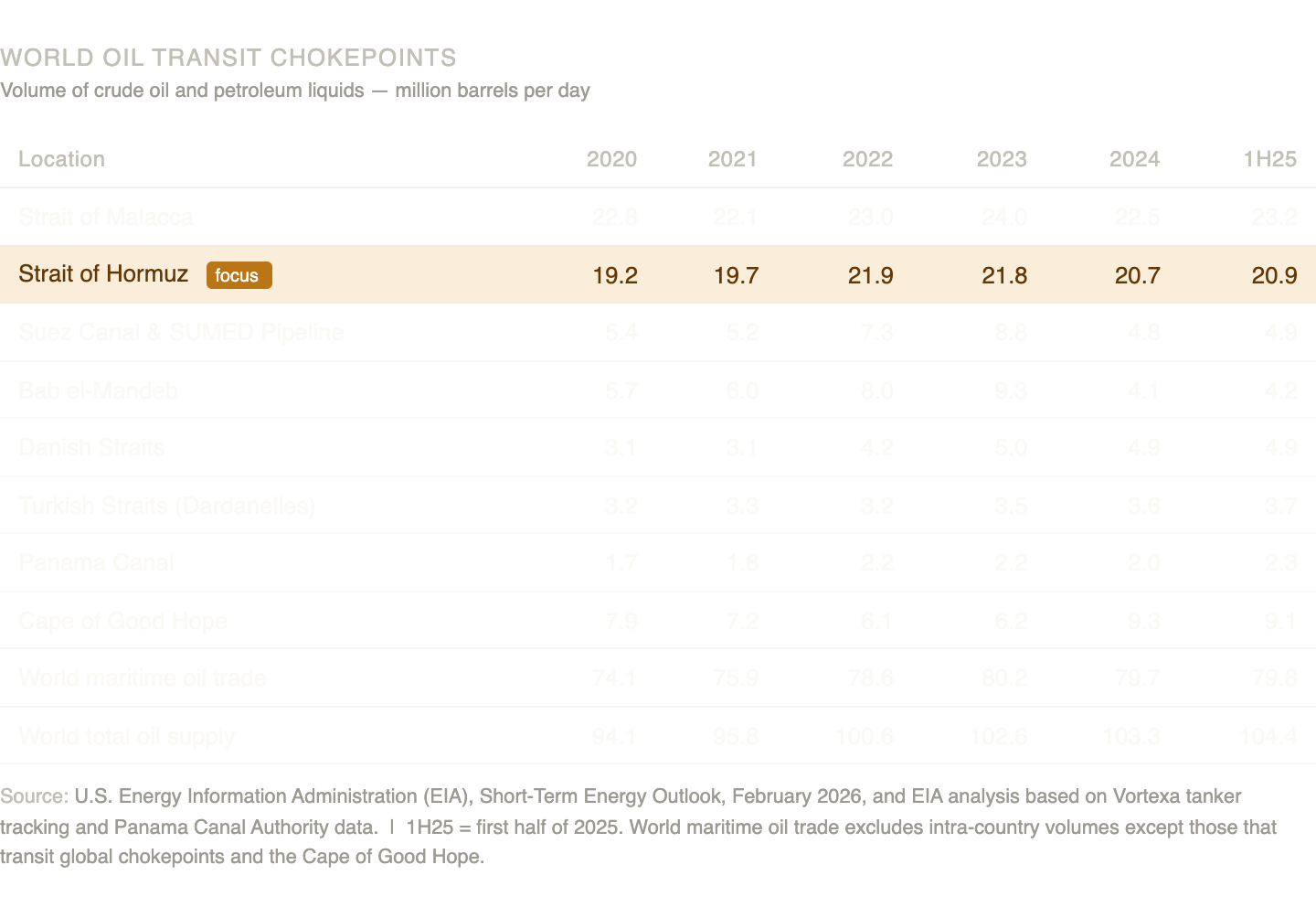
The Strait of Hormuz carries roughly 20 million barrels of petroleum per day...approximately 20% of globally traded oil and over 20% of global liquefied natural gas. You’ve seen those numbers. But the figure most people aren’t tracking is the one that matters most right now: transit time.
It takes 10 to 45 days for ships to reach their destination ports from the strait. That lag is the thing. Ships that were already at sea when the disruption began are still arriving. And the refinery systems that depend on them...most hold somewhere between seven and fifteen days of crude stock.
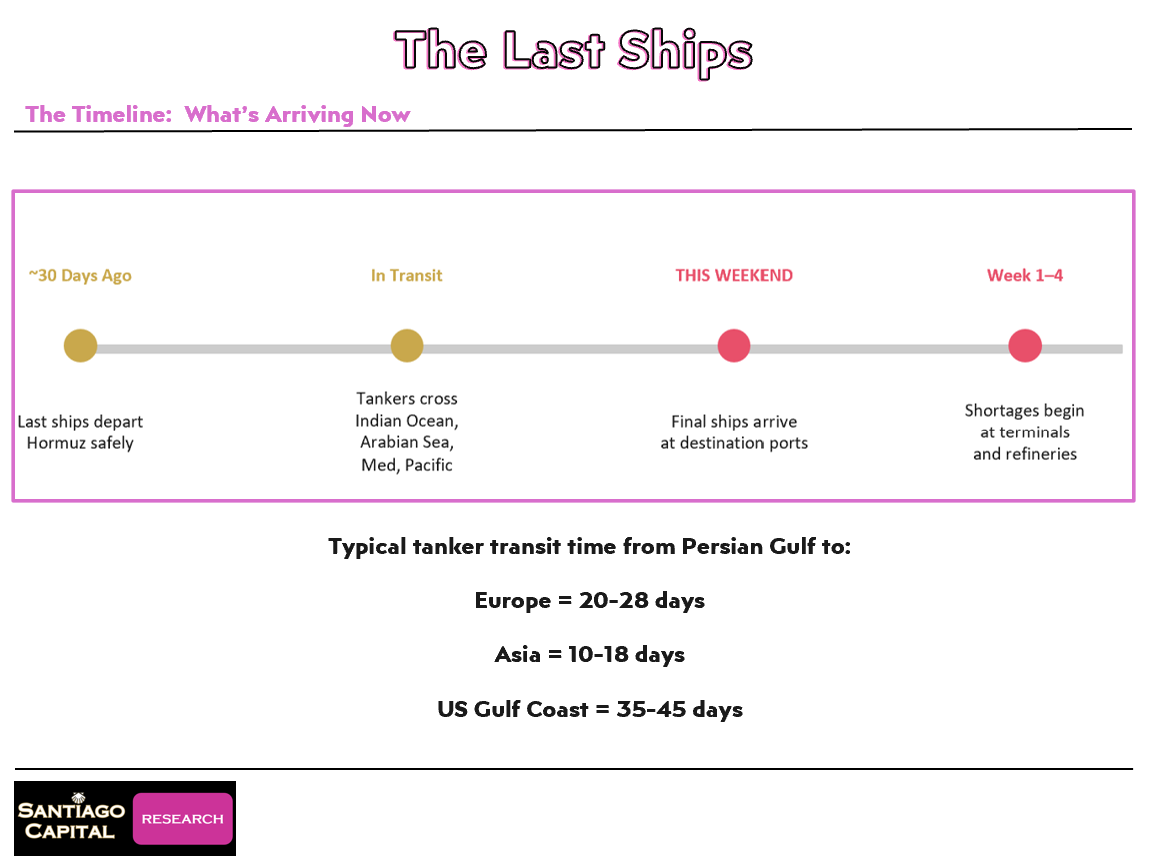
Here’s what that arithmetic means for your thinking: even in the most optimistic scenario, where some resolution materializes in the next few weeks, you are still looking at a meaningful supply shock. The refineries feel it first. Rationing hits next. And the downstream effects...energy prices, manufacturing inputs, food prices...follow on a timeline that stretches months, not days.
This is not a crisis that might happen.
It’s a crisis in transit.
Literally.