


![[Section Divider Image]](https://substackcdn.com/image/fetch/$s_!yjna!,f_auto,q_auto:good,fl_progressive:steep/https%3A%2F%2Fsubstack-post-media.s3.amazonaws.com%2Fpublic%2Fimages%2F68ad41ca-3485-48b4-bc0e-b16b16d5bbeb_1320x50.webp "[Section Divider Image]")
Six months ago, the debasement trade was the only trade. Gold to the moon. Silver to triple digits. The dollar back to the 80s, maybe the 70s, never to return. Goldman and JP Morgan had targets in the low 90s. Everybody was short the dollar. Selling the dollar and investing abroad was the trade of the year.
Then the dollar broke out to a thirteen-month high. It closed Friday a little over 101, back above its 50-day, 100-day, and 200-day moving averages. Gold closed below $4,000 on June 24th, off roughly 25 to 28 percent from its peak. Silver is down more than 40 percent from where it traded when the crowd was calling for $300. Crude has pulled back around 20 percent. Copper is off 8. Wheat, corn, the whole complex. Every hard asset the debasement crowd told you was a one-way ticket has been hit at the same time, and they have been hit while the dollar rose.
Why the debasement trade is unwinding right now
Here is the thing that matters, and it is the thing almost nobody saying “the debasement trade is dead” will tell you. The thesis is not wrong. Across decades, fiat loses value and real assets compound above it. More people, more innovation, more currency printed into existence. That is the whole reason you invest rather than stuffing cash under the mattress. The direction was never the argument.
The path was the argument. And the path is where people get hurt.
In Why Gold Just Sold Off, published in April 2026, we laid out the mechanic in plain terms. A thesis can be structurally correct and still produce violent corrections inside the bull move, especially when the consensus gets loudest. That was true in April when gold was drifting back from its parabola. It is even more true now that the dollar has firmed, the inflation conversation has turned hawkish, and the same banks calling for the low 90s are quietly explaining why the trade was always going to run out of steam.
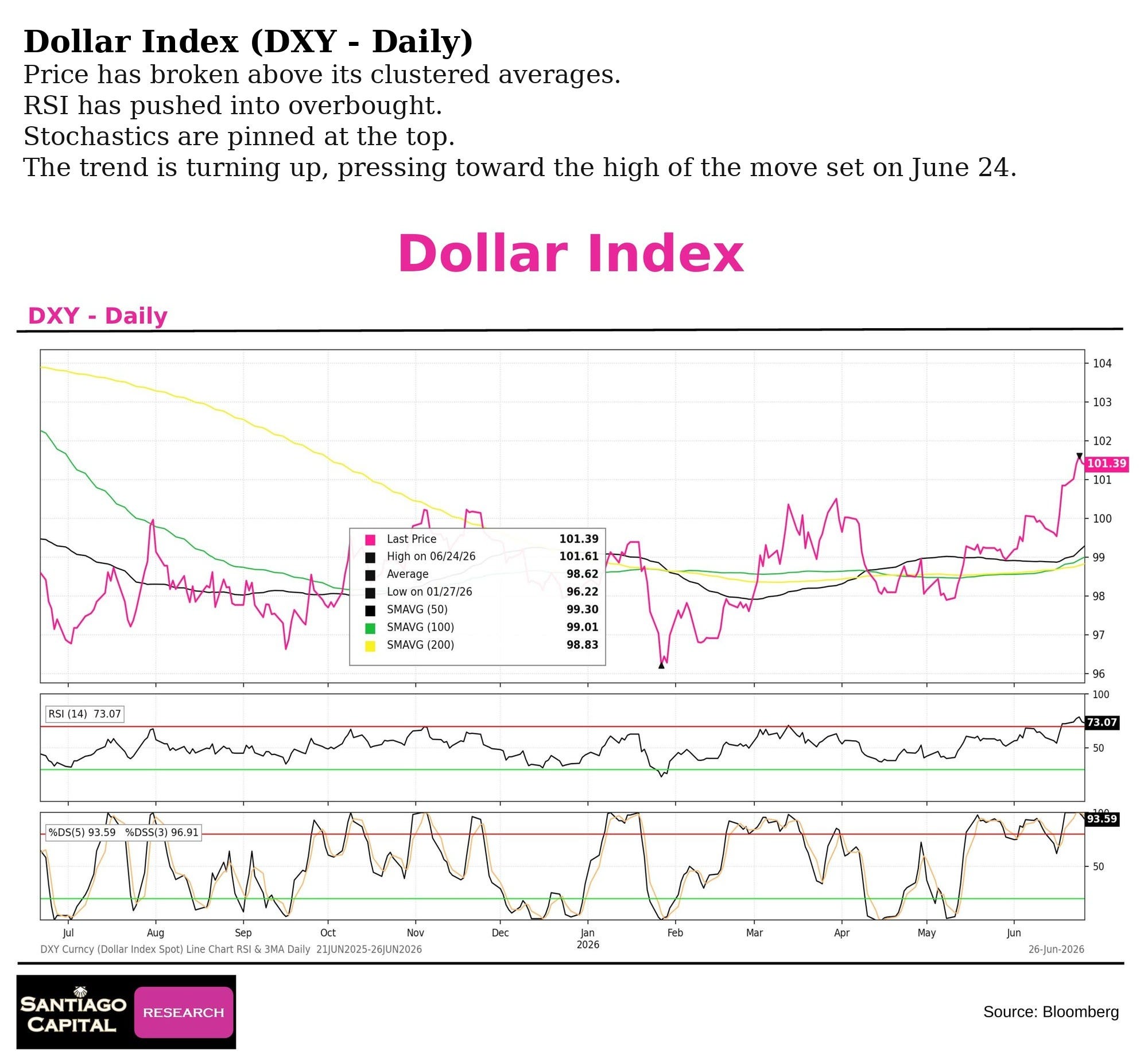
So what actually flipped? Why does the dollar keep rallying even though everybody says it should fail, even as central banks print and inflation ticks higher? Why did gold, the asset everyone owns precisely for a crisis, fall during a Middle East war instead of soaring? And why does understanding one currency index decide whether the next leg of this trade pays you or wipes you out?
That is what the rest of this piece is for. Below, we walk through the dollar mechanic that governs all of it...the reserve-asset paradox that explains the gold sell-off, the two carry trades the rest of the world is trapped between, and the band the dollar has to trade inside before something breaks. If you have ever wondered why your hard assets all fell on the same day, the answer is mechanical, and it is knowable.
The mechanics below the paywall are the part that keeps you from getting wiped out on the path to a destination you were right about. The full breakdown, plus the Sunday Macro Pilgrim’s Ledger and the complete paid archive, sits on the Premium side of the wall. And the timing matters this week: our quarterly promotion for the Pro report The Band closes soon. The Band is the 80-plus-page report this entire podcast is built on. Right now an annual upgrade gets you everything below this line and access to The Band before it goes back behind the Pro paywall. Reading the report alongside this piece is the difference between knowing the conclusion and understanding the machine.
→ Upgrade to annual ($399/year) to keep reading and to read The Band before access closes:


