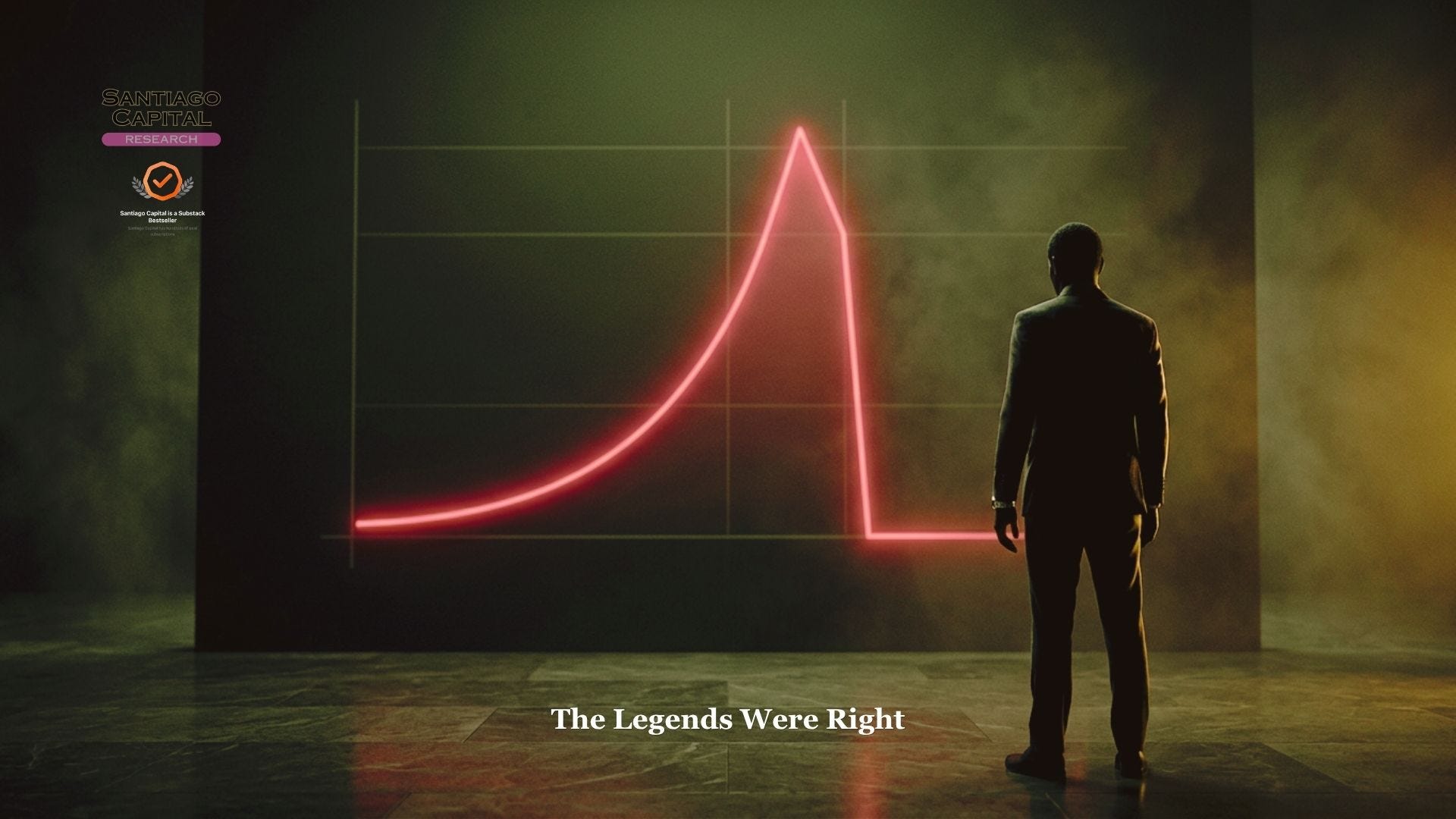
In 2013 you had a legend sitting across from you, telling you to be careful, and you did not listen. It cost you more than money. This is the story, and the lesson underneath it is the most useful thing you will read this week.
Start where the story starts. In 2012 you set up a small gold fund. You wanted physical metal, held outside the banking system, held outside the United States, with the freedom to hedge and to own a few mining shares, all in one vehicle instead of scattered across a dozen separately managed accounts. And because you were, in your own words, a nobody, you went looking for people who were not nobodies. Rick Rule agreed to sit on the advisory board. Don Kagan, one of the foremost numismatic experts in the country, the man they call when treasure turns up in the Sierras or off a sunken ship near Florida, agreed too. And then there was Jim Rogers.
![[Section Divider Image]](https://substackcdn.com/image/fetch/$s_!Q6jn!,f_auto,q_auto:good,fl_progressive:steep/https%3A%2F%2Fsubstack-post-media.s3.amazonaws.com%2Fpublic%2Fimages%2F71c38e55-1b88-40aa-b2da-172f4bcf3335_1320x50.webp "[Section Divider Image]")
How you get a legend on your advisory board
You did not have Jim Rogers’ phone number. You had his email, and you are still not sure how. So you wrote to him and said you would be in Singapore, where he lived, could you come by. You were not going to be in Singapore. He wrote back and said he would actually be in New York. Funny thing, you said, my flight to Singapore connects through New York. He kept responding. He kept asking who you were again. Eventually he told you to meet him outside the gym at the Hilton on Avenue of the Americas at eight in the morning.
So you flew to New York, which you had also not planned to do, and you showed up at 7:30 in a three-piece suit, and you waited, and he was not there. You finally walked into the gym and found him across the room on a stationary bike, pedaling, sweating. You sat down on the bike next to him in your suit. He looked over and said, what do you want. You told him. He said this was very unusual, he had never done anything like it. Then he said the thing you did not expect. He said he appreciated the effort it took to get there. Not yes. Not no. Send me what you have.
He said yes a few weeks later. You negotiated the fee down to about half of what he first asked. Then, ten minutes after you hung up, the real problem hit you. It does not help to say Jim Rogers is your advisor if the first question every client asks is whether he is actually in the fund. So you called him back and asked him for money. He asked how much he had to invest. You told him to send whatever he wanted. He sent a check. It was enough that you appreciated it.
That is how the board came together. Rule, Kagan, Rogers. You had built exactly the room you wanted, full of people who had lived through more cycles than you had. Which is what makes the rest of this so instructive.
The 2013 gold drawdown that taught the wrong lesson first
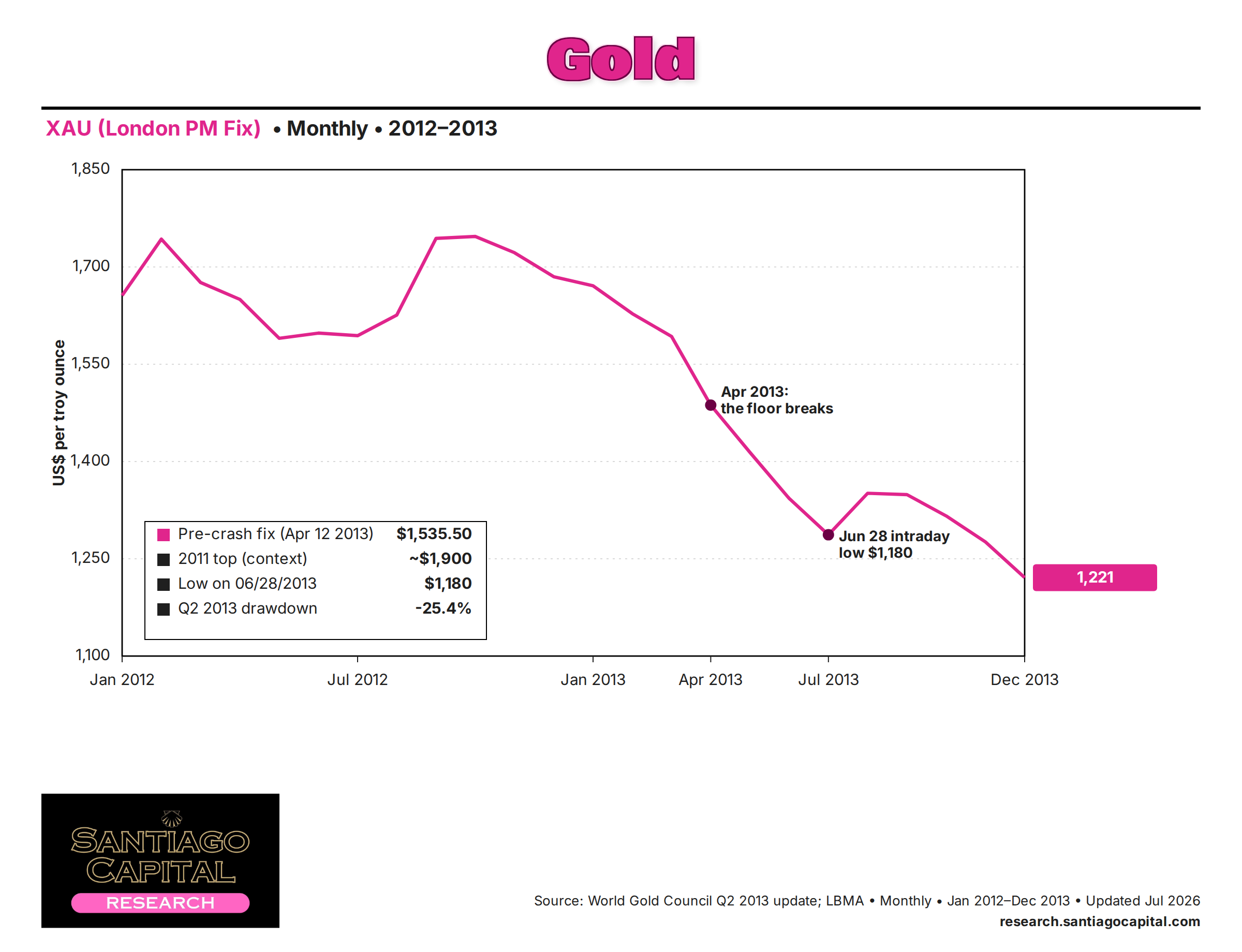
Then came 2013, and if you were anywhere near the precious metals market that year, you remember it in your body. Gold had topped in the summer of 2011 above $1,900 and had spent 2012 grinding sideways. Then in April 2013 the floor gave way. The World Gold Council’s own Q2 2013 market update recorded gold falling from a London PM fix of $1,535.5 an ounce on Friday the 12th to intraday lows near $1,320 the following Tuesday, driven by heavy selling in the futures and gold-ETF markets, with roughly 350 tonnes flowing out of ETFs by the end of April. The LBMA later described the same episode plainly: gold lost 25.4% in a single quarter, and did nearly half of that in two days. It kept bleeding into the summer and found its low of $1,180 on the last trading day of June.
You had hedged the book, because the freedom to hedge was one of the reasons you built the fund yourself rather than handing capital to someone else. The hedges helped. It was still brutal.
Here is what you learned first, and it was the wrong lesson. Behind the scenes, the same people you watched on conference stages telling everyone to be contrarian and buy when there is blood in the streets were, privately, coming apart. They were scared they would lose their businesses. You knew these people. You talked to them. And because you had hedges on, you were down less than they were. So you told yourself the thing that felt obvious in the moment. This is it. This is the blood-in-the-streets bottom everyone claims to be waiting for. Everyone is panicking, and you are positioned better than all of them.
So what did you do at what you were certain was the bottom? And why did the smartest man on your own advisory board go quiet at the exact moment you felt smartest? The move you made next looked like genius for about eight weeks. What Jim Rogers refused to say to you that afternoon in San Francisco took a decade to fully land, and it is the reason this story is worth your time. Here is what he told you instead, and what it cost you to ignore it.