

![[Section Divider Image]](https://substackcdn.com/image/fetch/$s_!ygZb!,f_auto,q_auto:good,fl_progressive:steep/https%3A%2F%2Fsubstack-post-media.s3.amazonaws.com%2Fpublic%2Fimages%2F199f3ae0-58c1-4311-8e7e-7cda15cb9ed0_1320x50.webp "[Section Divider Image]")
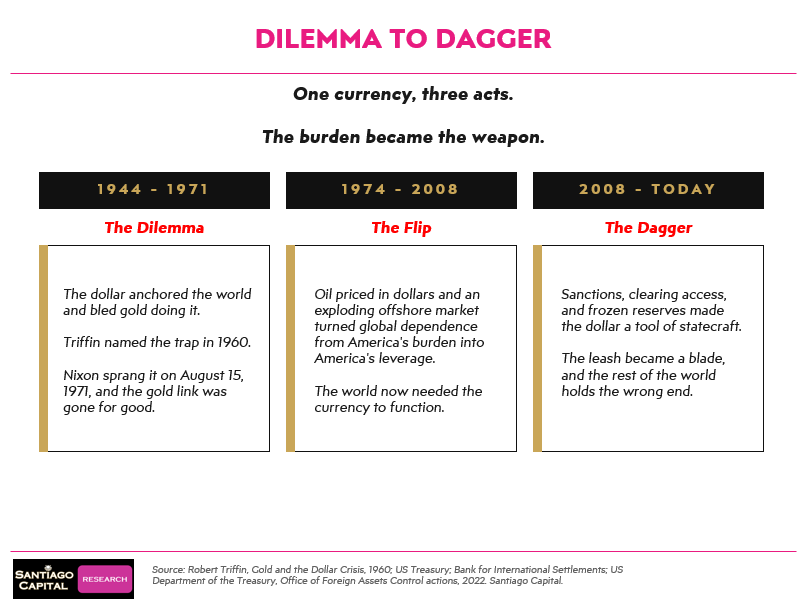
When economists talk about the dollar’s reserve status, they almost always reach for the same sixty-year-old idea. Robert Triffin warned Congress in the early 1960s that a single currency could not serve as the world’s reserve asset and stay anchored to gold at the same time. The two jobs would eventually collide. In August 1971, they did.
That is where most retellings stop. Triffin was right, Bretton Woods broke, the gold window closed, and the story gets filed under “things that happened.” What that telling misses is the part that actually matters to you as someone trying to read the dollar today. The dilemma did not resolve. It did not go away. It changed sides.
The same dependence that once strained the United States is now the glue binding the rest of the world to the dollar. The burden became the weapon. And if you want to understand why every de-dollarization headline keeps dying on contact with the data, that transition is the whole story.
What Triffin’s Dilemma Actually Was
Start with the original mechanism, because the reversal only makes sense against it.
After World War II, forty-four nations sat down at the Bretton Woods Hotel in New Hampshire and built a system where the dollar was the world’s reserve currency, anchored to gold at thirty-five dollars an ounce, and every other currency was anchored to the dollar. For the system to function, dollars had to flow out of the United States and into the rest of the world to grease global trade. The more trade grew, the more dollars the world needed.
Here is the trap Triffin identified. To supply those dollars, the United States had to run persistent deficits. But every dollar held abroad was a claim on American gold, redeemable on demand. The more dollars the world held, the larger the claim on a gold pile that could not grow at the same speed. The needs of the domestic economy and the needs of the global economy were on a collision course, and the collision would drain the gold out of the country.
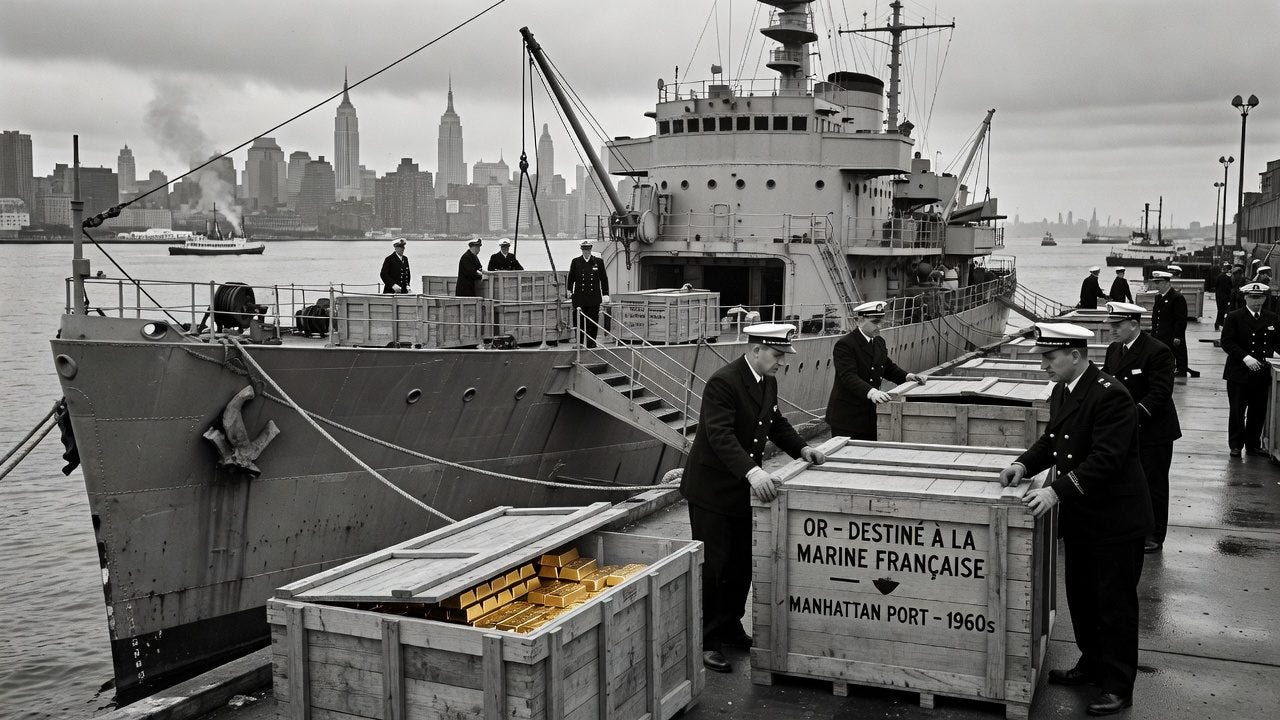
He was not wrong. From 1961 to 1971, foreign dollar claims grew far faster than US gold reserves could cover. France sent a warship to Manhattan to haul its gold home. Germany and Britain started making the same noises. Before the vault emptied, Nixon closed the window. The dilemma had done exactly what Triffin said it would. The issuer carried the cost.
How the Petrodollar Flipped the Burden
Then came the part Triffin never lived to map.
About three years after the gold window closed, Treasury Secretary William Simon made a quiet trip to Saudi Arabia and came back with a deal: the Saudis would price oil in dollars and recycle the proceeds into US Treasuries, and in exchange the United States would underwrite Saudi security and development. By 1975 the rest of OPEC had followed.
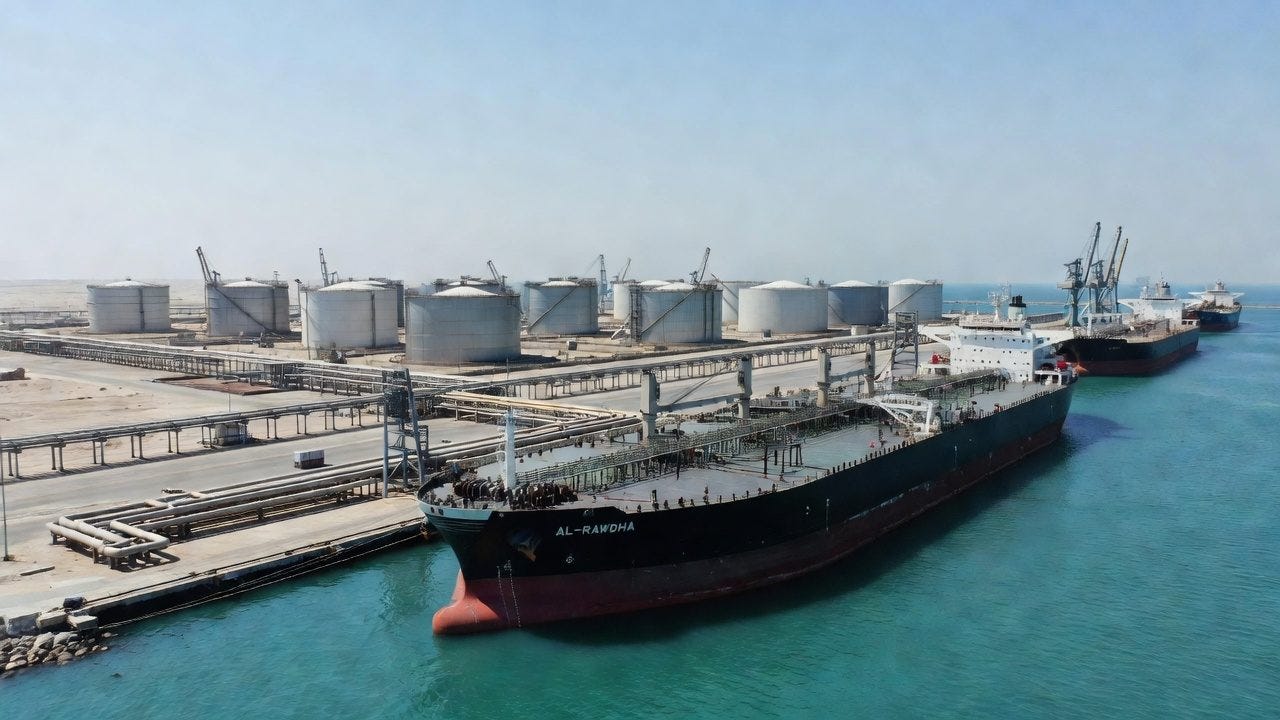
It is fashionable to call this the petrodollar. The label undersells what actually happened. Because the deal did not just stabilize the dollar after the gold shock. It took the exact mechanism that was supposed to bleed America dry, and reversed the direction of the bleeding. The dilemma did not get solved. It got turned around and pointed at everyone else.
Here is how the burden became the weapon.


