

![[Section Divider Image]](https://substackcdn.com/image/fetch/$s_!U7mk!,f_auto,q_auto:good,fl_progressive:steep/https%3A%2F%2Fsubstack-post-media.s3.amazonaws.com%2Fpublic%2Fimages%2F3aa8c450-05d2-4fe2-b55b-00f0f8f16a0d_1320x50.webp "[Section Divider Image]")
On July 29th, the Energy Information Administration published a number that traveled fast. The Strategic Petroleum Reserve held 307.7 million barrels for the week ending July 24th. The lowest level in more than forty-three years.
The reaction wrote itself. America has been drained. The cupboard is bare. Whoever is running this thing has run it into the ground.
It is not that the number is wrong. The number is exactly right. It is that almost nobody quoting it has stopped to ask what the reserve was built to do, or whether the last five months are the program failing or the clearest demonstration in fifty years of the program working.
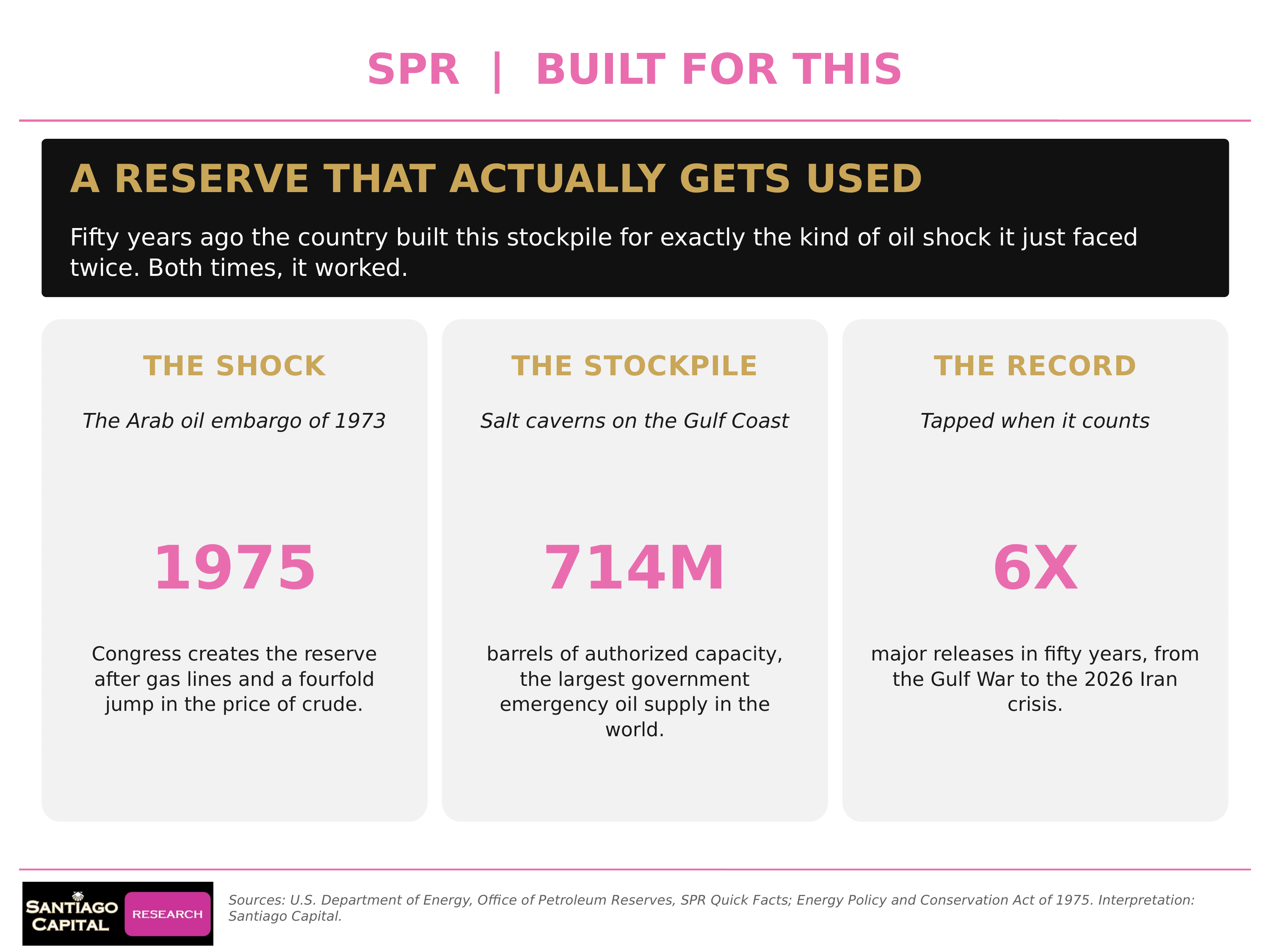
Why the Strategic Petroleum Reserve Exists at All
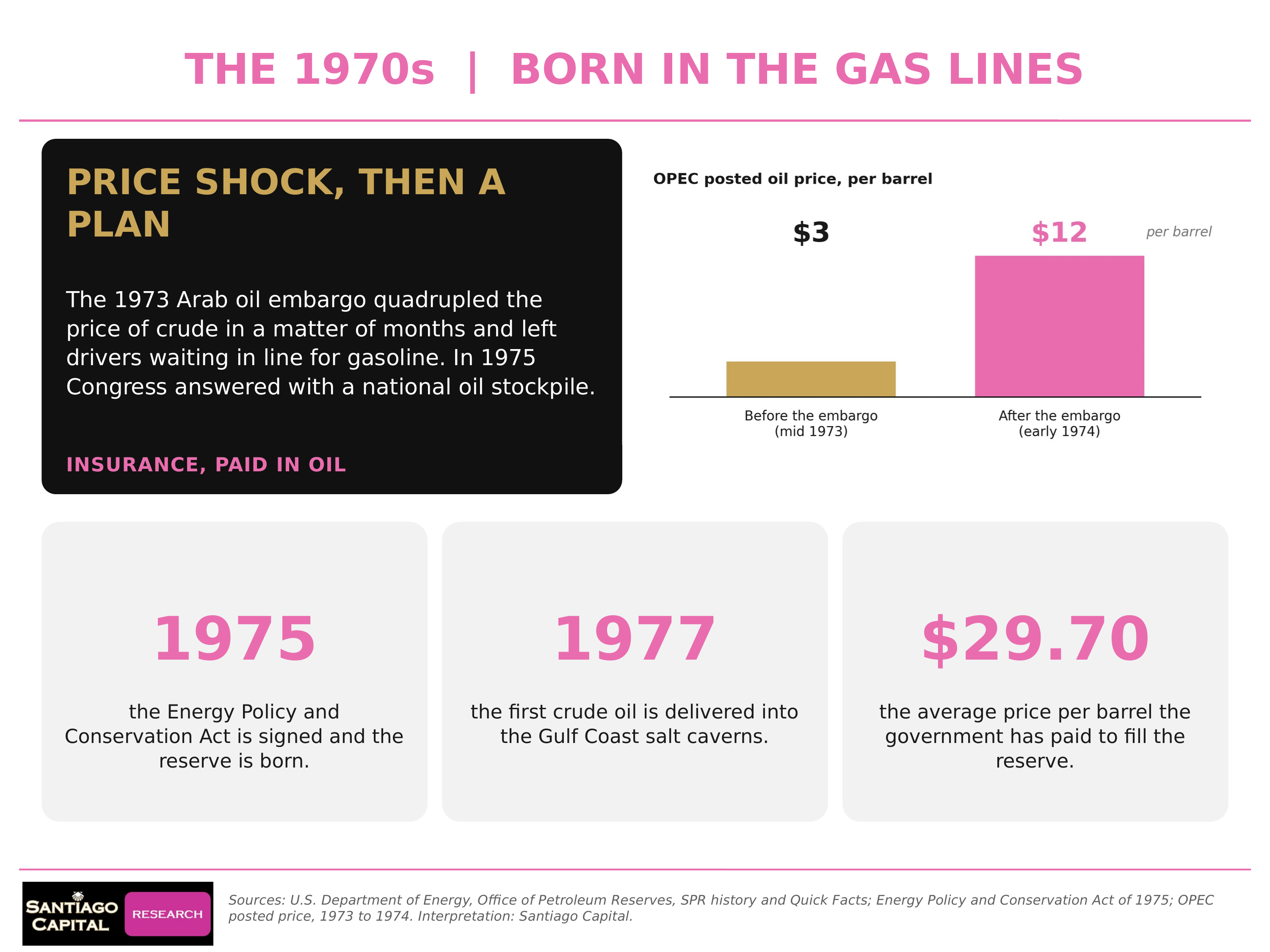
Congress created the SPR through the Energy Policy and Conservation Act, signed December 22, 1975. The first crude went into the salt caverns in 1977. All 412,000 barrels of it.
Understand what came immediately before. On October 19, 1973, hours after Nixon asked Congress for $2.2 billion in emergency aid to Israel, the Arab members of OPEC embargoed the United States. Production cuts followed. The price of crude ran from around $3 a barrel to nearly $12 inside a matter of months.
Gas lines. Rationing. Speed limits. The embargo tipped the country into its worst recession since the war, pushed inflation toward 12 percent and unemployment toward 9, and cut the stock market roughly in half from its 1973 peak. It landed on a president already bleeding out from Watergate.
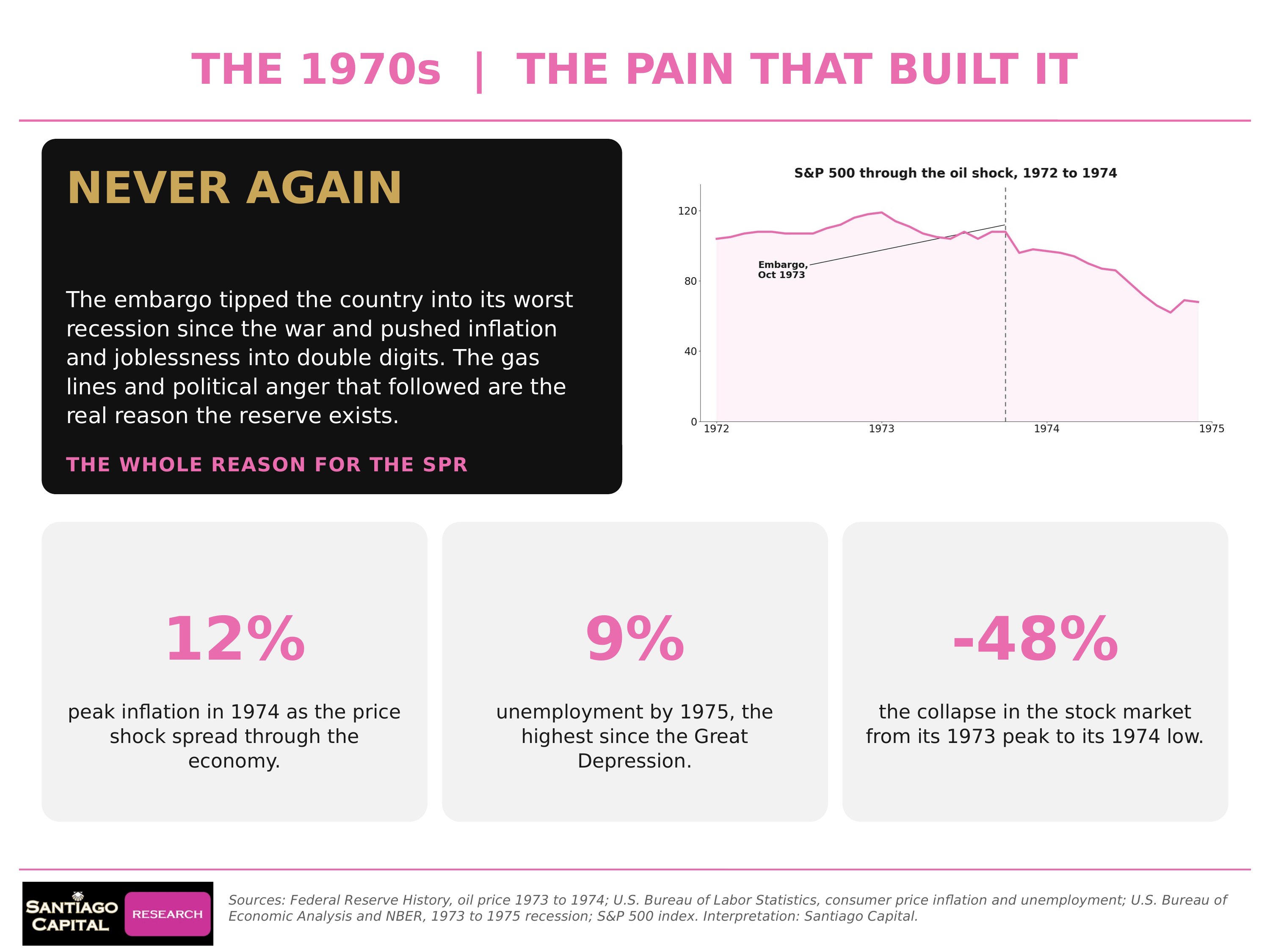
The reserve was not built out of foresight. It was built out of pain. First came the shock, then came the plan. That sequence tells you exactly what the builders were trying to prevent, and it was not a shortage of fuel for warships.
The military already had that covered. Elk Hills and Teapot Dome, the Naval Petroleum Reserves, were set aside in 1912 and 1915 for precisely that purpose. That problem was solved before the First World War. The SPR arrived six decades later to solve a different one.
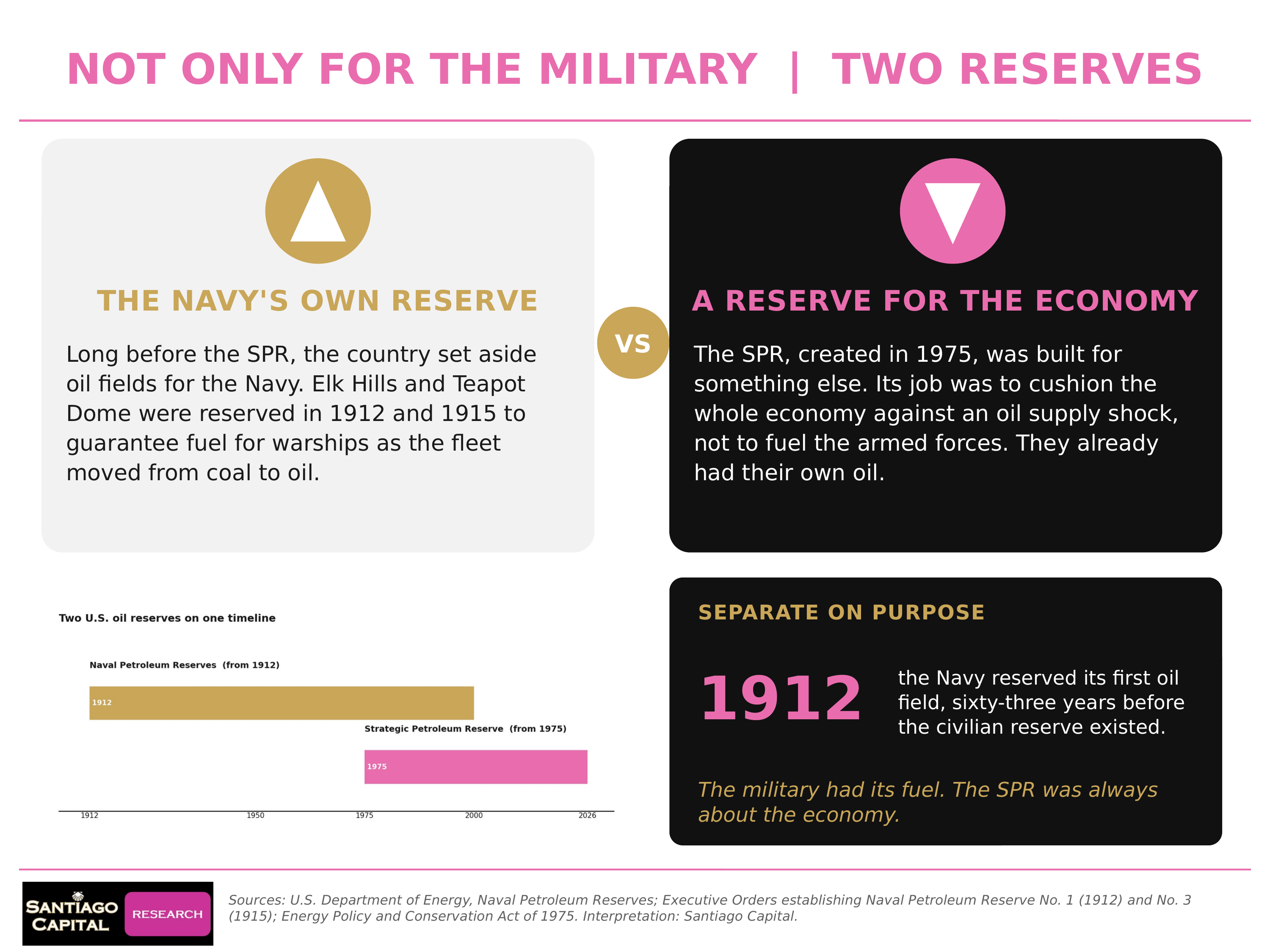
The SPR is an economic instrument. It always was. Which means the test of whether it has been managed well is not whether the caverns are full. The test is whether the economy sitting on top of them got protected.
By that test, the last five months look nothing like the story you have been reading.
Here is what the record actually shows.
You have read the case for why the reserve was built. What you have not read is the case for why the last five months are the clearest evidence in fifty years that it worked.
Below this line is the part free readers do not see. The five presidential drawdowns and which crisis each one answered. The 2022 trade that sold near $95 and refilled cheaper. Why China is drawing down the largest reserve on earth while the same commentators who call America’s drawdown a scandal call Beijing’s patience. And the one number that tells you whether a 43-year low is a hole in the ground or a bill that has already been paid.
Premium opens all of it, plus the Sunday Macro Pilgrim’s Ledger and the full paid archive this argument is built on.
The reserve gets judged on whether it was full. The better question is whether it was spent well. That answer is below.
→ Upgrade to our $399/yr plan to continue reading.


