Your Portfolio Was Built for a World That No Longer Exists
The institutional architecture that guaranteed mean reversion is ending. Here’s what deglobalization means for your portfolio strategy.

![[Section Divider Image]](https://substackcdn.com/image/fetch/$s_!1CU6!,f_auto,q_auto:good,fl_progressive:steep/https%3A%2F%2Fsubstack-post-media.s3.amazonaws.com%2Fpublic%2Fimages%2Ffd0f188e-6d6f-42e7-9237-2302b300d87d_1320x50.webp "[Section Divider Image]")

There’s an assumption buried inside almost every institutional portfolio built in the last forty years.
It’s not written down anywhere. Nobody advertises it. But it’s there, load-bearing, underneath everything...the belief that when the system breaks, it comes back. That the Fed steps in. That the institutional architecture holds. That disruption is temporary and the trend is your friend if you’re patient enough to wait it out.
That assumption had a name. The Rules-Based Order. And for the better part of eight decades, it was the most reliable fact in finance.
It is no longer obvious that it is true.
Step back from the daily noise for a second and think about what you’re actually looking at. The first globalization ended in 1913. Not with a clean break...but with a slow unraveling that didn’t resolve for 37 years. The 60/40 portfolio lost roughly 40% of its real value in the 1970s, not because stocks crashed, but because the correlation between bonds and equities flipped. Japan’s Nikkei peaked in December 1989 and didn’t recover nominally for 34 years. Never in real terms.
Thirty-four years is not a tail risk. It is an investment lifetime.
The question you need to answer right now isn’t whether things are going to get better. It’s whether the mean you’re waiting to revert to still exists.
The Globalization Era Gave You Mean Reversion as a Feature, Not a Law
Here’s what the globalization era actually gave you, and why it mattered more than most investors ever stopped to appreciate.
For nearly eight decades, the combination of Bretton Woods, the Rules-Based Order, and eventually the free-trade consensus created a specific structural property in financial markets: mean reversion. Not as a historical tendency...but as an engineered guarantee. When shocks happened, the Federal Reserve had room to cut. When correlations broke, central banks had tools to restore them. When economies contracted, multilateral institutions backstopped the system. Recovery wasn’t natural selection. It was institutional design.
That’s why the 60/40 portfolio worked. That’s why long-volatility strategies worked. That’s why buying the dip worked. These weren’t natural laws of markets. They were downstream consequences of a deliberate geopolitical architecture that made mean reversion structurally reliable.
And that architecture is now being deliberately dismantled.
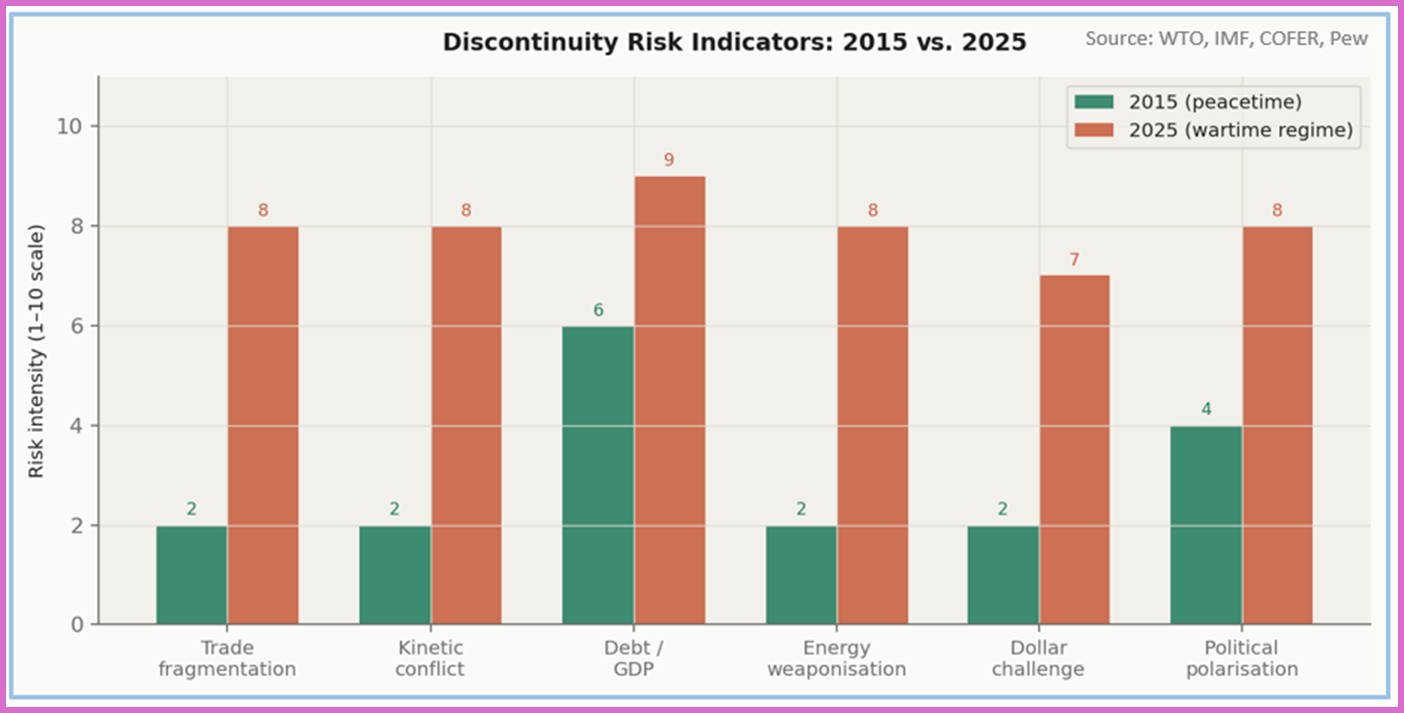
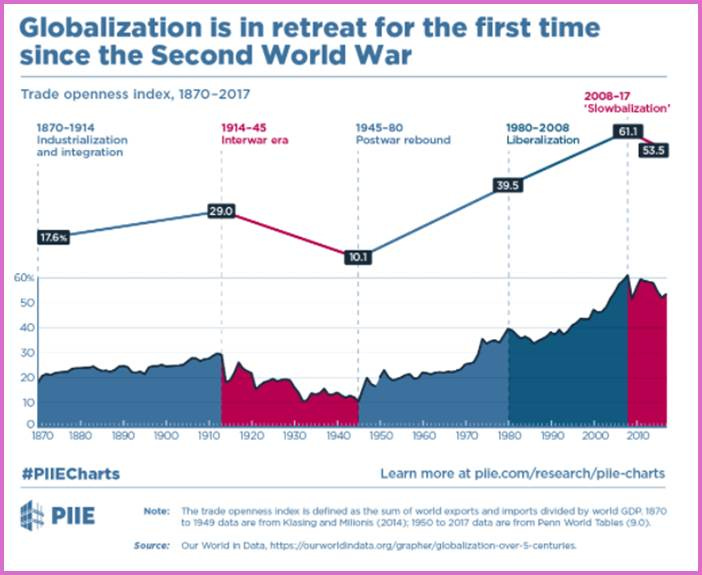
You can see it in the trade openness data. Global trade as a percentage of GDP peaked around 2008 and has been declining since...for the first time since the Second World War. Governments aren’t just responding to shocks. They are deliberately trading cost for security, redundancy for optimization, and control for openness. The forces driving this aren’t temporary.
Five structural accelerants are at work simultaneously: the US-China rivalry for technological and resource dominance, supply chain fragility exposed by COVID and Ukraine, the energy transition and the race for critical minerals, domestic political pressure from decades of wage stagnation and hollowed-out manufacturing regions, and the weaponization of finance itself. The freezing of Russian reserves and the exclusion of Russian banks from SWIFT removed any remaining illusion that global capital flows are politically neutral.
This is not a passing market correction. It is a structural reordering. Let’s dig in…