
Think, Laugh, Cry #43
How Alan Watts' dream experiment reveals why we secretly crave struggle over endless pleasure

THINK
Alan Watts was a British philosopher who spent most of his life doing something that sounds simple and turned out to be incredibly hard: explaining Eastern philosophy to people in the West without ruining it.
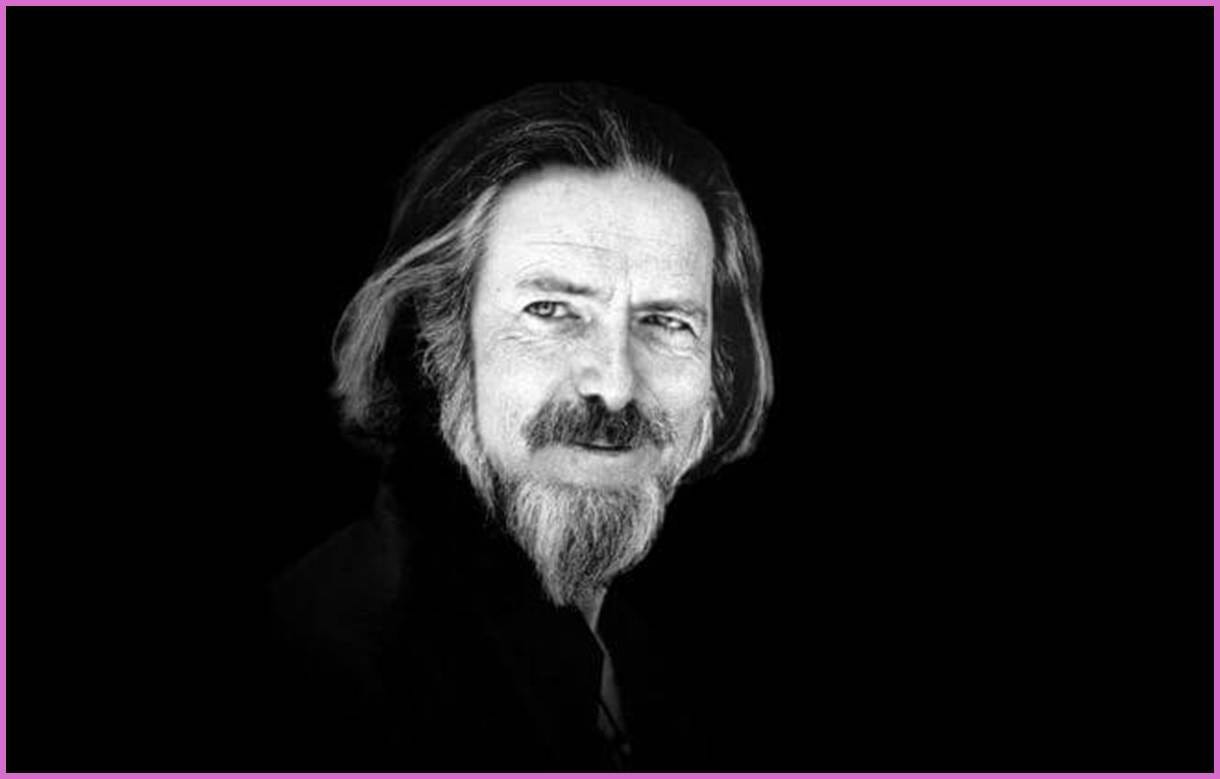
He wrote more than two dozen books and delivered hundreds of lectures, many of which were recorded and are still in wide circulation today. He had a gift that most philosophers do not -- he could make a difficult idea feel almost obvious the moment he said it out loud, as if the listener had always known it and simply lacked the words. His lectures have the quality of a long exhale.
And one of his most enduring thought experiments starts with a question so deceptively simple it sounds like something a child would ask.
Imagine, Watts said, that you could dream any dream you wanted. Whatever you wished for, the dream would be completely convincing. Every sensation, every detail, perfectly real.
What would you dream about?
Most of us would start with the obvious things. Pleasure. Beauty. Wealth. Love. And for a while, that would be wonderful. But after a hundred nights of getting exactly what you want, after a thousand nights, something would begin to happen.
You would get bored.
Not because the dreams were bad, but because they were too easy. Nothing at stake. No resistance. No surprise. Pure wish fulfillment, it turns out, is not actually that fulfilling.
So, you would start making the dreams harder.
You would introduce challenges. Then real obstacles. Then uncertainty about whether things would work out. Then genuine risk. And eventually, Watts suggested, you would go one step further. You would introduce the one ingredient that makes all the rest of it matter: you would arrange to forget that it was a dream at all.
Because without that forgetting, the stakes are not real. The loss is not real. The joy is not real. The whole thing is just theater you are watching from a safe distance. To truly experience something, you have to not know how it ends.
This is where Watts lands the idea like a quiet punch: the life you are living right now, with all of its confusion and heartbreak and surprise and occasional grace, might be exactly the dream you would have chosen. You are here, in this specific life, with these specific complications, because at some level this is what genuine experience requires. Not comfort. Not certainty. Not a smooth and predictable road.
Yet there is something in us that resists this.
We spend enormous energy trying to control things. We want to know what comes next. We build routines and backup plans and contingencies upon contingencies. We treat uncertainty as a problem to be solved rather than the very thing that makes the whole enterprise worth showing up for. And when life refuses to cooperate, when the diagnosis comes, when the relationship falls apart, when the thing we worked toward does not work out, we feel betrayed. As if the universe deviated from a contract we never actually signed.
But control is a strange thing to want so badly.
A life where everything goes as planned is a life without detours, and the detours are often where the most interesting things happen. The dinner you almost did not go to. The city you ended up in by accident. The conversation that changed the way you thought about something you thought you had figured out. None of that fits neatly into a plan. Most of it arrives uninvited.
Watts was not arguing for passivity. He was not saying that effort is pointless or that suffering is secretly good. He was making a more subtle point: that the desire for total control is a desire to opt out of being alive in any meaningful sense. A river does not fight the shape of the land. It finds its way through it. And something about that way of moving through the world, responsive rather than resistant, curious rather than braced, seems to produce a richer life than the alternative.
What Watts is really asking us to consider is whether we are taking any of this for granted. Not in the sentimental way that phrase usually gets used, but in the most literal sense. We move through days as if days are guaranteed. We treat the people around us as permanent fixtures. We assume there will be more time to do the thing, say the thing, go to the place. And all of that assumption rests on a foundation that is, if you look at it directly, completely unearned.
The problems are real. The losses are real. There is no philosophical sleight of hand that makes grief lighter or fear smaller. But consider what the alternative to all of it would look like. A flat, risk-free existence where nothing is uncertain and therefore nothing is surprising, where the outcome is always known and therefore nothing is really at stake. Most of us, if we are honest, would find that unbearable inside of a week.
Watts recorded most of his lectures informally, for small audiences, often with a drink in hand, and there is a warmth to them that academic philosophy usually lacks. He was not trying to build a system. He was trying to help people wake up to something that was right in front of them. That the strangeness of being alive, the sheer improbability of it, the fact that consciousness exists at all and that you happen to be one of the places it showed up, this is not background noise. It is the whole show.
The link below is Watts delivering this idea himself, in his own voice. It runs just over a minute. After you listen to it, you may find yourself sitting quietly for a moment. And in that moment, here is the question worth sitting with:
If you could have designed the life you are living, the whole thing, the losses included, the uncertainty included, the parts you would never have chosen included, is it possible that you would have designed something that looked a lot like this?