
Less Than Zero
How negative real interest rates are rewiring global finance and reshaping every investment decision you make.

![[Section Divider Image]](https://substackcdn.com/image/fetch/$s_!1MB5!,f_auto,q_auto:good,fl_progressive:steep/https%3A%2F%2Fsubstack-post-media.s3.amazonaws.com%2Fpublic%2Fimages%2Ffe6e552e-6465-4331-a094-8d413cf1356a_1320x50.webp "[Section Divider Image]")
Real interest rates across the developed world are compressed to historic lows. Several major economies sit in negative territory. That is the condition the new Pro report below is about, and it is one of the most consequential and least covered structural realities in markets right now.
It is also the deepest precondition for almost everything else we have been writing about for the past year. The fiscal expansion that funds the geopolitical turn. The central bank accommodation that supports stretched valuations. The search for yield that pulls capital into riskier corners every quarter. None of it makes sense without the monetary layer underneath. That monetary layer is the subject of Less Than Zero: The Price of Addiction in a Debt-Based World.
What follows here is the public-facing setup. The architecture is below the paywall.
![[Section Divider Image]](https://substackcdn.com/image/fetch/$s_!a_LL!,f_auto,q_auto:good,fl_progressive:steep/https%3A%2F%2Fsubstack-post-media.s3.amazonaws.com%2Fpublic%2Fimages%2F57629512-7304-4fc9-9c8a-1542d51c9a1c_1320x50.webp "[Section Divider Image]")
What Negative Real Interest Rates Actually Are
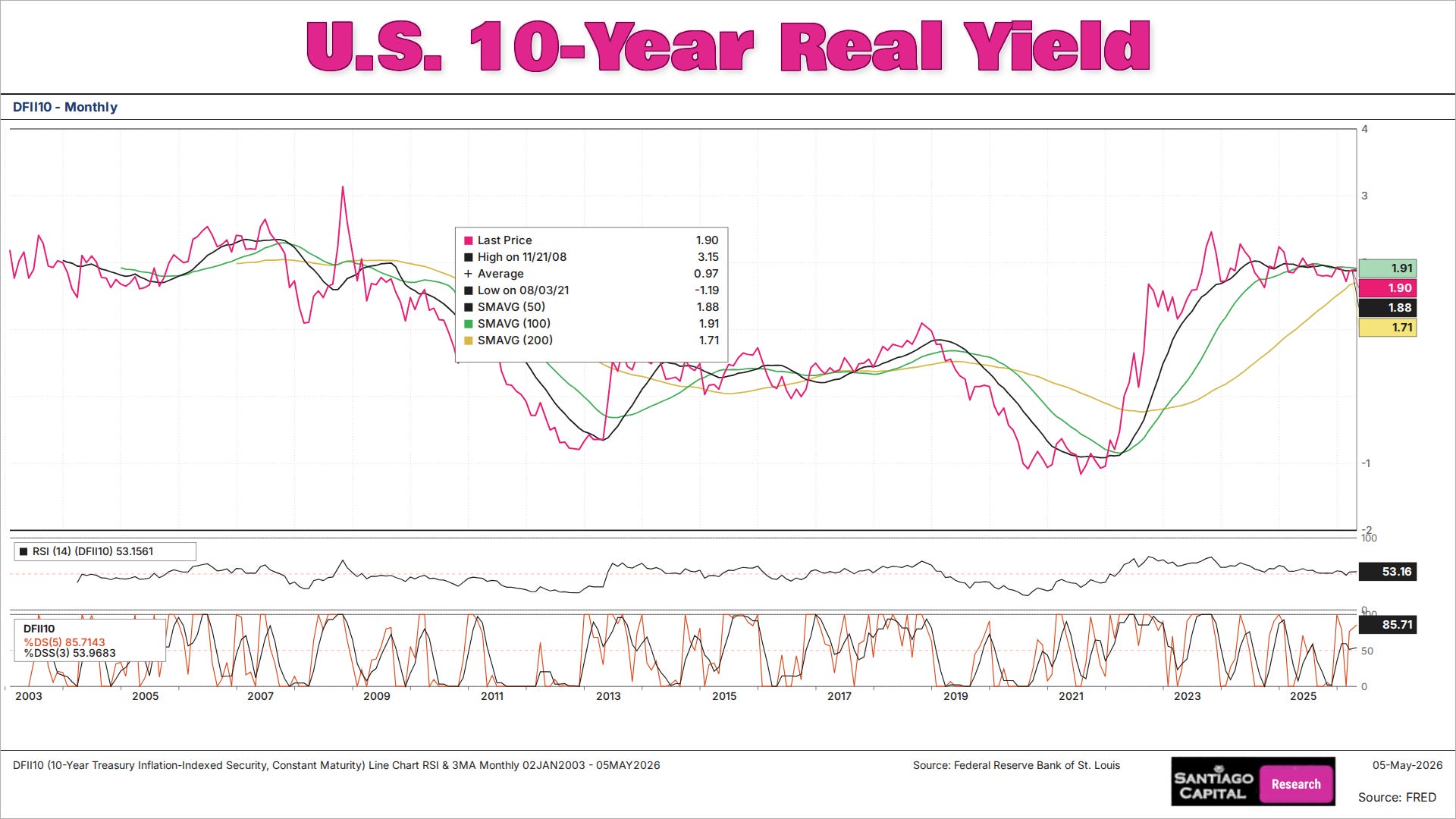
The real interest rate is the nominal rate minus inflation. If a central bank sets policy at 4% and inflation runs at 5%, the real rate is negative 1%. The saver who parks capital in a government instrument earns a positive nominal return and a negative real one. Purchasing power declines. Money is being taxed by the passage of time.
This is not a technical curiosity. Real rates are the economy’s most fundamental intertemporal price signal. They determine the return to patient capital. When they turn negative, the incentive structure of the entire financial system inverts. The saver is punished. The borrower is subsidized. The speculator is rewarded.
The condition is not new. It is not even unusual. It is, by historical standards, recurring. And the consequences of every prior episode are knowable in considerable detail.
The Research Arc Behind This Report
If you have been reading this publication over the past year, the argument that lands in Less Than Zero is one you have already seen pieces of. It is the expression of a thesis built piece by piece, and the threads have been converging on this monetary layer for months.
In National Interest and Deglobalization, published September 2025, we argued that the globalization era was ending not cyclically but structurally. The rules-based order was giving way to something older and more familiar. Governments were trading cost for security, redundancy for optimization, control for openness. The forces driving that shift were not temporary. They were the same contest for resources, territory, and monetary dominance that has characterized every prior era of history. That structural realignment requires fiscal expansion. Fiscal expansion creates pressure on the monetary system. The monetary system responds by accommodating. Less Than Zero is what that accommodation looks like under the hood.
In Empire by Code and Stablecoin Wars, we mapped how the dollar was not just defending its reserve status but actively extending it, encoding American monetary hegemony into the digital infrastructure of global commerce. The Dollar Milkshake Theory has been our core framework for years. What those two reports added was the architectural layer: the rails on which dollar dominance now operates. The rails matter for Less Than Zero because the dollar’s structural position is precisely what allows the United States to maintain compressed real rates without triggering the kind of currency crisis that less central economies cannot avoid.
In The End of Peacetime Portfolios, published March 2026, we made the investment implications explicit. The toolkit most institutional investors are using to manage tail risk was built for a world that is disappearing. Long-volatility strategies, the 60/40 portfolio, the assumption that shocks resolve toward prior equilibria... all calibrated for a world where institutional architecture guaranteed mean reversion. Less Than Zero extends that argument by showing one of the specific monetary mechanisms that has broken the toolkit.
And in The Last Ships, published April 2026, we walked through the agricultural and energy consequences of a fragmenting Persian Gulf chokepoint that the consensus is still not fully pricing. That report named the supply-side forces. Less Than Zero names the monetary-side forces. They are the same story from two angles.
The Dollar Milkshake Theory runs through all of it. Eurodollar mechanics run through all of it. Realpolitik runs through all of it. They all do.
Why This Argument Lands Now
We have written about negative real rates before, in passing. We have not made them the center of a Pro report until now. The reason is that the configuration has changed.
The traditional 60/40 portfolio’s foundational assumption... that bonds rally when stocks fall... has been breaking down since 2020. The protection is not what it used to be. The institutions that manage the largest pools of capital in the world have been quietly flagging this for two years. Most investor portfolios have not adjusted.
That is not a coincidence. It is what late-cycle environments look like. The signals are visible to anyone willing to read the institutional research published by the people who underwrite credit, set monetary policy, and allocate sovereign reserves. The signals have been ignored because doing so has been profitable, and because the cost of being early is real.
But the cost of being late is not symmetric. Every prior episode taught the same thing about that asymmetry. The report below walks through the historical record and shows what the record argues for now.
What the Report Walks Through
Less Than Zero is the longest piece of monetary research we have published. It opens with a metaphor we have not used before, organizes the argument around four scenarios, and walks through the cross-asset framework that has held across every major historical episode of negative real rates over the past century.
The transmission mechanisms. The historical record. The structural case for why this episode looks like the late-cycle configurations that preceded prior dislocations. The framework for reading what comes next. The case for why the standard portfolio answers from the last fifteen years are unlikely to be the right answers for the next fifteen.
We have not buried any of it. The case is laid out in full.
The regime is doing what it does whether you are reading carefully or not.
The full report sits below this line. The framework. The math. The four prior episodes ranked by how each one ended. Four scenarios for how this one resolves, and what each one means for the standard playbook.
If you are already a Pro subscriber, the report begins below. If not, the upgrade opens the report, and the rest of the Pro archive.